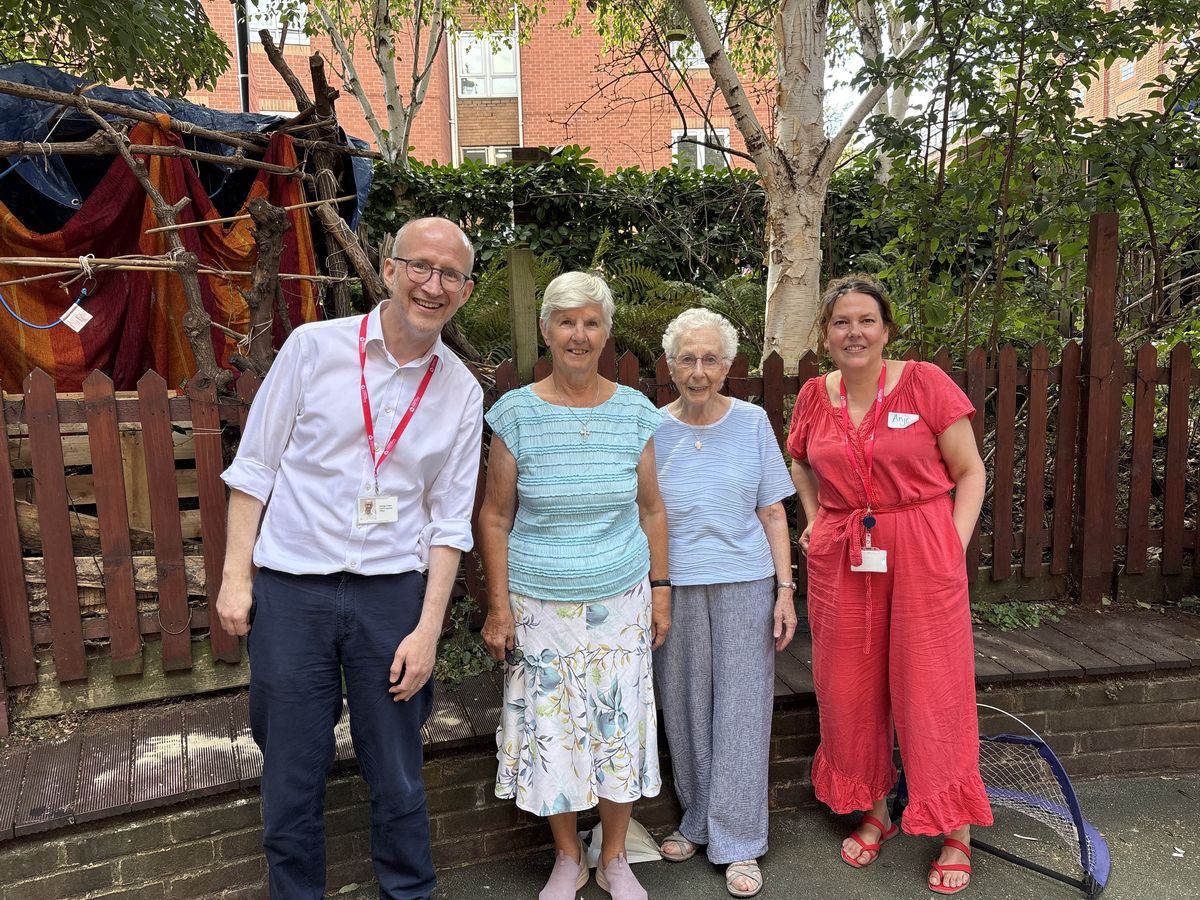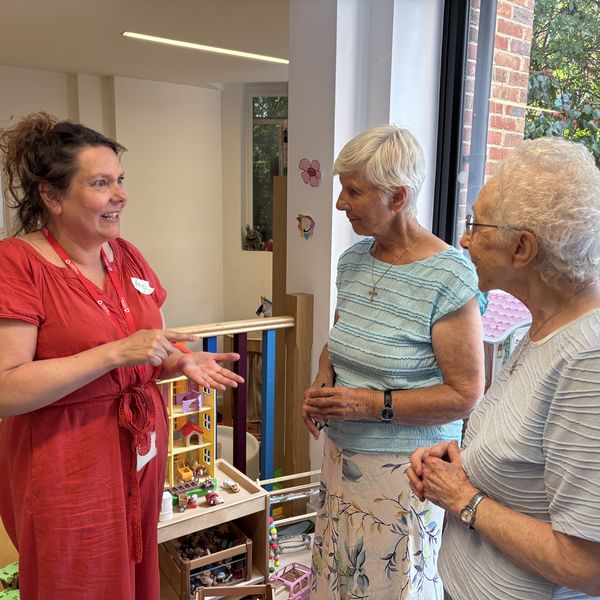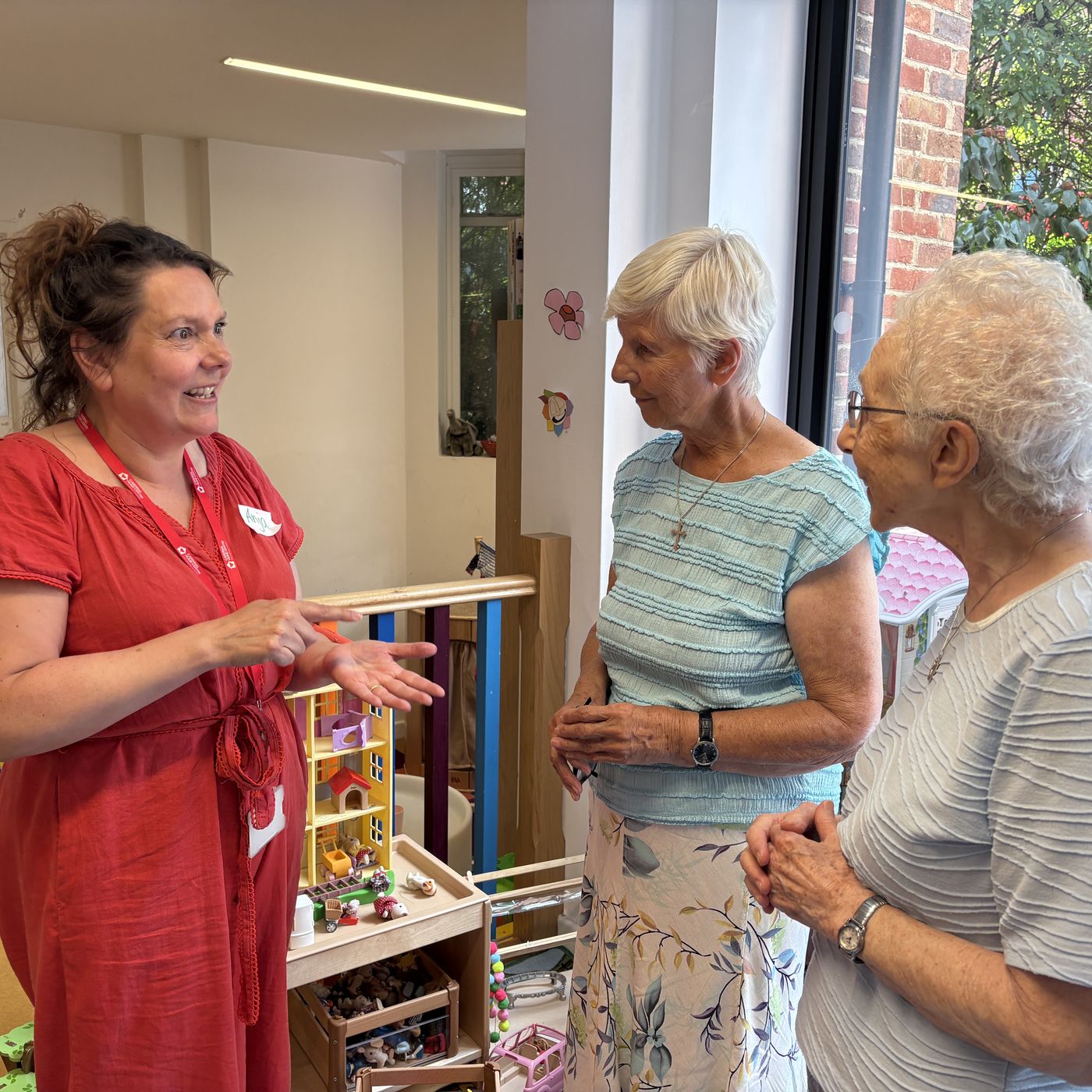
Forty years after helping establish the Cardinal Hume Centre, Sister Maria Parcher and Sister Lelia O'Shea returned to the building where it all began – and remembered how an ambitious idea became reality.
In 1985, Sister Eileen O’Mahoney, a Daughter of Charity who had helped establish The Passage, noticed increasing numbers of young people experiencing homelessness. Concerned about what would happen without support for their needs, she began exploring the idea of a separate project for young people.
With Monsignor Pat O’Donoghue, known as POD, she identified the soon-to-be-vacated convent on Arneway Street as a potential home.
POD approached Cardinal Basil Hume, who supported the idea and asked religious orders across the diocese to help. Some gave money, while others offered sisters to work there. Cardinal Hume organised a meeting and Sister Maria and Sister Lelia was among the people there.
In 1986, Sister Eileen and Father Peter Corcoran, the new Chaplain of the adjoining Sacred Heart Church, moved into the empty convent and began turning the idea into reality. Sister Eileen drove the project forward, while Sister Maria Parcher, also a Daughter of Charity, researched gaps in support, visiting established homelessness organisations and bed and breakfasts across London. Father Peter spread the word of the need for support for people experiencing homelessness in Westminster.
People thought homeless people were those sleeping on the streets. They didn’t realise there were families living in hotels with nowhere permanent to call home.
What Sister Maria discovered helped shape the Centre’s future. Parents, often with babies and young children, had to leave their temporary accommodation in the morning and could not return until evening. One mother lived with two young children on the second floor, while the kitchen was in the basement.
‘How could she safely carry a meal upstairs with two small children?’ Sister Maria remembers thinking. ‘We had to do something. And there was nothing around here at that time.’
The new Centre would support both young people and families. Sister Maria opened the new family day centre as the first service in the building.
Sister Eileen also knew the Cardinal’s name would give the fledgling project valuable support. She found him walking in Vincent Square and, Sister Maria recalls, took a typically no-nonsense approach: ‘We need your name,’ Sister Eileen told him.
The Arneway Street Centre became the Cardinal Hume Centre.
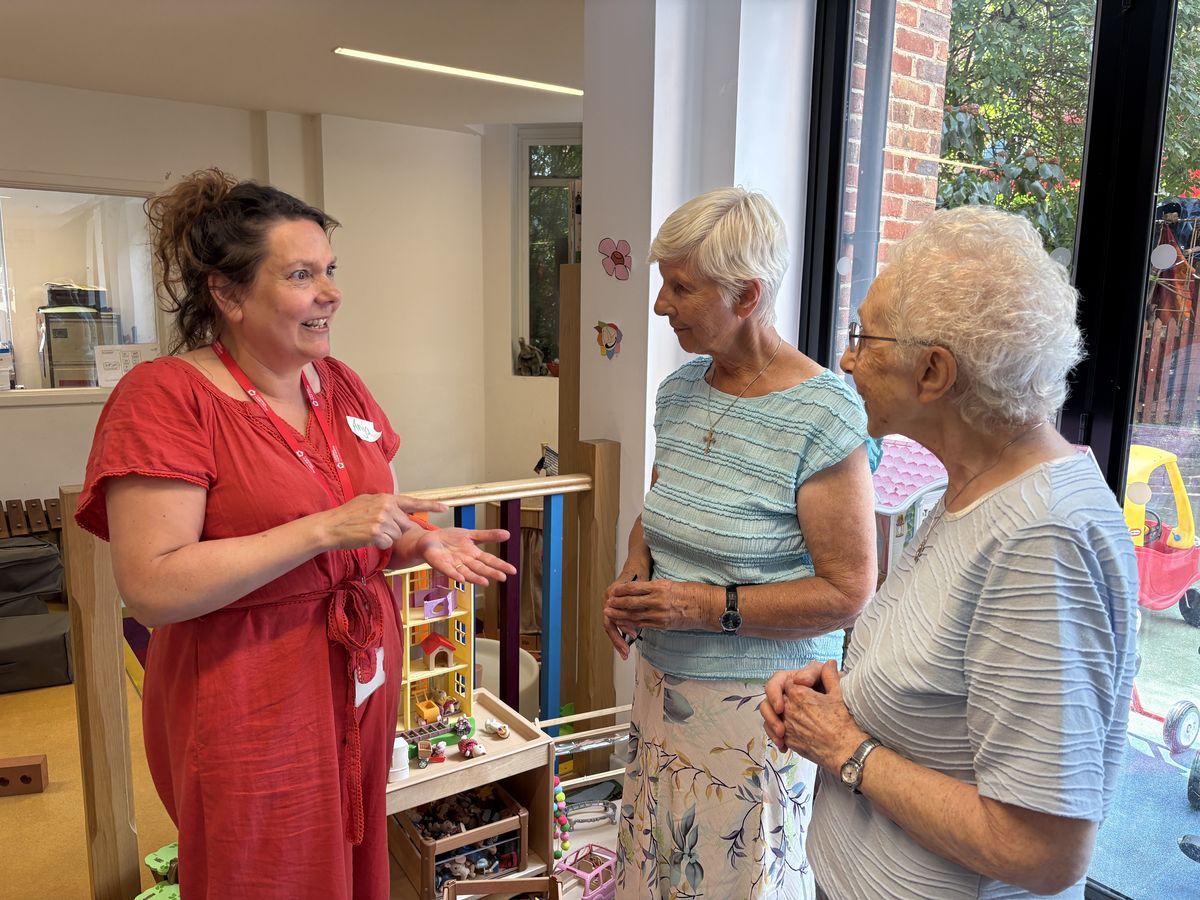
Sister Lelia was among the sisters who came to work at the Centre. Living and working alongside sisters from other congregations was something new, and together they created a community of their own.
‘I’d not heard of it before,’ remembers Sister Lelia. ‘I think it was a bit unusual.’
Some had spent their working lives in education or healthcare, but a growing movement within the church encouraged more direct work with people experiencing poverty.
‘I was very happy as a teacher,’ Sister Lelia says. ‘But I wanted to do something more directly with the poor.’
The beginnings were modest. The Centre had little money and relied on religious congregations and its first supporters for much of what it needed.
‘The furniture was all leftovers,’ Sister Lelia remembers. ‘People donated sofas that they had in their homes.’
Nothing major has changed. But everything has developed so much better.
At the time, many people had a limited understanding of family homelessness.
‘People thought homeless people were those sleeping on the streets,’ says Sister Maria. ‘They didn’t realise there were families living in hotels with nowhere permanent to call home.’
The sisters visited hotels, talked to parents and told them about the Centre. Families came five days a week. Children had somewhere to play, parents joined activities and the sisters prepared lunch. Later, they added a laundry room. Sister Maria also helped families advocate with councils and social services.
‘It was very much an embryo of what it is now,’ Sister Maria says.
Returning after so many years brought home both how much has changed – and how much of what they began remains.
‘It’s so much better than how we started. But then it would never be if we hadn’t started it.’
She concluded: ‘Nothing major has changed. But everything has developed so much better.’